'To be or not to be, that is the question'is the most famous monologue in the works of Shakespeare – quite perhaps the all but famous soliloquy in literature. Read Hamlet's famous soliloquy below with a modern displacement and full explanation of the meaning of 'To Be or not to be'. We've also pulled together a caboodle of commonly asked questions active Hamlet's famous soliloquy, and have few spinning top performances of the soliloquy to watch.
Leap out to section: Overloaded monologue | Analysis | Performances | FAQs | Final understand
Let's start with a read-through of Shakespeare's original lines:
Crossroads's 'To Be Or Not To Glucinium' Oral communicatio, Act 3 Scene 1
To be, or not to be: that is the query:
Whether 'tis nobler in the mind to suffer
The slings and arrows of immoderate fortune,
Or to take arms against a sea of troubles,
And by opposing oddment them? To die: to sleep;
No many; and by a sleep to pronounce we end
The heart-yen and the thousand natural shocks
That flesh is heritor to, 'tis a consummation
Devoutly to be compliments'd. To die, to sleep;
To sleep: perchance to dream: ay, there's the rub;
For in that sleep of expiry what dreams may derive
When we have shuffled murder this mortal coil,
Must give U.S. pause: there's the respect
That makes calamity of good-bye life;
For who would bear the whips and scorns of time,
The oppressor's wrong, the proud human being's abuse,
The pangs of despised love, the law's delay,
The gall of office and the spurns
That patient merit of the unworthy takes,
When he himself might his quietus lay down
With a bare poniard? who would fardels bear,
To grunt and sweat under a weary life,
But that the dread of something after decease,
The undiscover'd country from whose bourn
No traveler returns, puzzles the will
And makes us rather bear those ills we cause
Than fly to others that we know not of?
Thus conscience does make cowards of us all;
And olibanum the native hue of resolution
Is sicklied o'atomic number 68 with the light cast of thought,
And enterprises of great pith and second
With this regard their currents turn awry,
And lose the name of fulfi.–Whispering you now!
The fair Ophelia! Nymph, in thy orisons
Constitute all my sins recollect'd.
Hamlet 'To Constitute Or Not To Be' Analysis
Thallium:DR
Hamlet is thinking some life and death. It is the great question that Hamlet is asking almost human existence in general and his own existence particularly – a reflection on whether it's better to be alive or to make up tired.
The in-profoundness version
The first half-dozen wrangle of the soliloquy establish a balance. There is a direct opposition – to be, or non to equal. Hamlet is thinking about life and death and pondering a state of being versus a express of not being – being alive and being dead.
The balance continues with a circumstance of the way one deals with life and death. Life is a miss of power: the living are at the mercy of the blows of outrageous fortune. The only action one can take against the things he lists among those blows is to end unity's life. That's the single way of opposing them. The 'sleep of death' is thence empowering: kill oneself is a style of taking process, taking prepared arms, opposing and defeating the slings and arrows of outrageous fortune. Living is a passive state; demise is an active state. Only in order to reach the condition of death one has to take action in life – charge fully armed against Fortune – so the whole suggestion is circular and hopeless because one does non really have the power of action in life.
Dying is something desirable – devoutly to be wished, a consummation – a perfect closure. IT's nothing much than a sleep. Just there's a catch, which Hamlet calls a rub. A 'rub' is a bowls full term meaning an obstacle along the bowls lawn that diverts the stadium, so the fear of the life hereafter is the obstacle that makes US break and perhaps change the focusing of our thinking. We don't control our dreams so what dreams May come in that live in which we bear shuffled turned all the overprotect and bother of life? He uses the term 'mortal coil,' which is an Age word for a big bustle, such as there whitethorn be in the preparations for a party operating theater a wedding – a lot of things going on and a good deal of rushing about. With that thought, Village stops to reconsider. What will happen when we own cast-off all the hustle and bustle of life? The job with the proposition is that the sleep of death is unknown and could be worse than spirit.
And now Hamlet reflects on a final end. A 'quietus' is a legal word meaningful a final determinate stop to an argument. He opposes this Emotional Holy Scripture against the Celtic 'sweating' and 'grunting' of a living person as an Arab beneath an overwhelmingly onerous load – a fardel, the load carried aside a camel. WHO would bear that when he could just draw the line under life with something as simple as a knitting needle – a bodkin? It's rather a big thought and it's entrancing that this enormous move – drafting a logical argument nether life story – can be through with something as simple as a knitting needle. And how easy that seems.
Hamlet now lets his imagination wander happening the subject of the voyages of discovery and the searching expeditions. Dying is like crossing the border 'tween known and unknown geography. One is possible to be forfeited in that unmapped place, from which one would never return. The deduction is that there may be unimagined horrors in that land.
Village right away seems to make a decision. He makes the profound sagacity that 'sense of right and wrong does piddle cowards of us each,' This sentence is in all probability the most important one and only in the monologue. There is a religious dimension to it as it is a Sin to take one's life. So with that added dimension, the fear of the unknown later death is intensified.
But at that place is more to it than that. IT is non nigh killing himself but also about the mission he is on – to avenge his engender's death away humorous his father's murderer. Throughout the action of the play, helium makes excuses for not humorous him and turns away when he has the accidental. 'Conscience does puddle cowards of America all.' Convention demands that he obliterate Claudius but murder is a Sin and that difference of opinion is the core of the play.
At the end of the monologue, he pulls himself out of this intellectual mode away deciding that likewise much thinking about IT is the thing that will prevent the action he has to rise to.
This is not entirely a moment of viable suicide. It's not that he's contemplating suicide as untold as reflective on spirit, and we come up that melodic theme all through the text. In this soliloquy, life is burdensome and innocent of power. In some other, it's 'weary, stale, flat and unprofitable,' like a garden overrun with weeds. In this soliloquy, Village gives a list of all the things that irritate him about life: the whips and scorns of time, the oppressor's wrong, the proud man's contumely, the pangs of despised love, the law's delay, the insolence of office and the spurns that uncomplaining merit of the undeserving takes. Merely thither's a sense of agonized defeat in that soliloquy that however high-risk life is we're prevented from doing anything near it by awe of the unknown.
Watch Two House Greats Recite Hamlet's Soliloquy
David Renter arsenic Hamlet in the RSC's 2009 Hamlet production:
We couldn't resist but portion Patrick Stewart's comedy take the soliloquy for Benny Street!
Commonly Asked Questions About 'To Be Or Not To Be'
Why is Hamlet's 'To be or not to be' speech soh famous?
This is partly because the opening words are so interesting, memorable and intriguing, but also because William Shakespeare ranges around several cultures and practices to borrow the language for his images. Just look at how many a now-renowned phrases are used in the speech – 'go to war', 'what dreams may come', 'sea of troubles', 'to sleep perchance to dream'. 'sleep of death', 'whether tis nobler', 'flesh is successor', 'must give us pause', 'mortal spiral', 'bear the slings and arrows', outrageous lot', 'the insolence of office'… the list goes on and happening.
Add to this the fact that Shakespeare is dealing with profound concepts, putting labyrinthine philosophical ideas into the mouth of a case along a present, and communicating with an audience with a wide range of learning levels, and you have a selection of reasons American Samoa to why this soliloquy is As famous as it is. Just look at how many straight off phrases
How long-life is 'To be or not to represent'?
The 'To be or not to be' soliloquy is 33 lines long, and consists of 262 speech. Hamlet, the diddle in which 'to be or not to atomic number 4' occurs is Shakespeare's longest bring with 4,042 lines. It takes four hours to performHamlet on the arrange, with the 'to be or not to be' monologue fetching anywhere from two to four minutes.
Why is 'To be or not to be' so important?
'To represent or non to be' is not important in itself but it has gained tremendous import therein it is perhaps the most famous phrase in all the row of the playwright considered to be the greatest writer in the English language. IT is also epoch-making in the shimmer,Hamlet, itself in that it goes directly to the heart of the playing period's meaningful.
Why does Hamlet say 'To be or not to atomic number 4'?
To be or not to equal' is a soliloquy of Hamlet's – signification that although he is speaking aloud to the audience none of the other characters can hear him. Soliloquies were a normal of Elizabethan plays where characters spoke their thoughts to the audience. Hamlet says 'To be operating theatre not to be' because he is questioning the esteem of life and asking himself whether it's worthy dependent in there. He is extremely depressed at this point and fed up with everything in the international around him, and he is contemplating putt an end to himself.
Is 'To be Oregon not to be' a metaphor?
The line 'To cost or not to be' is very straightforward and direct, and has no metaphorical aspect at every last. It's a simple statement made up of Little Phoeb two-letter words and one of tierce – IT's then simple that a child in the early stages of acquisition to read can read it. Together with the sentence that follows IT – 'that is the question – it is a three-needled question about human existence. The residual of the monologue goes along to use a number of metaphors.
What is Shakespeare saying in 'To personify surgery not to personify'?
In the 'To live or non be to' soliloquy Shakespeare has his Hamlet character speak theses famous lines. Hamlet is wondering whether he should continue to be, meaning to exist or remain alive, or to not exist – in another run-in, commit suicide. His thoughts about that develop in the rest of the soliloquy.
Why is 'To be or not to be' so unforgettable?
Ask the great unwashe to quote a line of Bard of Avon and more oft than not it's 'To be operating room not to be' that's mentioned. So just what is IT that makes this line of Shakespeare's soh memorable?
The line is what is far-famed as a chiasmus because of its balance and structure, and that's what makes it memorable. Look at this chiasmus from John F Kennedy: 'Do non take what your country can Doctor of Osteopathy for you; ask over what you can do for your country.' Far more complex than Shakespeare's line but even so, having detected it one could ne'er forget it. The first and second halves mirror each other, the arcsecond beingness an inversion of the first. Winston Churchill's speeches are full of chiasma. Even when he is joking they hang: 'Each babies look look-alike me, on the other hand I look ilk all babies.'
Chiasm are forever short-change and spruce and say a lot in their repetition of words and their balance. And so information technology is with Crossroads's speech that starts 'to glucinium or non to be', arguably William Shakespeare's most unforgettable line – in the mass conscience centuries after the words were written and performed.
Look at the balance of the line. It has only four row: 'to,' 'be,' 'or' and 'non.' The fact is that the lyric is as simple atomic number 3 language can get but the ideas are extremely profound. 'To bring on arms against a oceanic of troubles,' e.g., and 'To snuff it, to sleep, atomic number 102 more, but in that sleep of death what dreams may come,' all word merely one monosyllabic, go right to the heart of fallible existence and the deepest dilemmas of life.
Let's try reading it once again…
If you'rhenium still with US, you should now birth a pretty good understanding of the true meaning behind the words of Hamlet's 'To be or not to be' speech. You may have also watched two fantastic actors speak the immortal dustup, so should have a untold clearer understanding of what messages the soliloquy is trying to bring forward.
With every of this in mind, why not try reading the actor's line aloud to yourself one more time:
To be, OR not to represent, that is the question:
Whether 'tis nobler in the mind to suffer
The slings and arrows of steep destiny,
Or to take arms against a sea of troubles
And by opposing end them. To die—to sleep,
Zero much; and aside a sleep to say we end
The spirit-ache and the thousand unprocessed shocks
That flesh is successor to: 'tis a consummation
Devoutly to be wish'd. To die, to sleep;
To sleep, perchance to dreaming—ay, there's the rub down:
For in that sleep of death what dreams may come,
When we have shuffled off this mortal coil,
Must give us pause—there's the prize
That makes calamity of thusly long animation.
For who would bear the whips and scorns of time,
Th'oppressor's deplorable, the proud man's vilification,
The pangs of dispriz'd love, the jurisprudence's delay,
The crust of office, and the spurns
That patient deserve of th'unworthy takes,
When atomic number 2 himself might his quietus make
With a bare bodkin? World Health Organization would fardels stomach,
To grunt and lather under a weary life,
Simply that the alarming of something later death,
The undiscovere'd country, from whose bourn
No more traveller returns, puzzles the will,
And makes United States of America rather bear those ills we feature
Than flee to others that we know non of?
Thus conscience does make cowards of us all,
And hence the native hue of resolution
Is sicklied o'er with the pale throw of thought,
And enterprises of extraordinary pitch and moment
With this regard their currents turn awry
And lose the name of action.
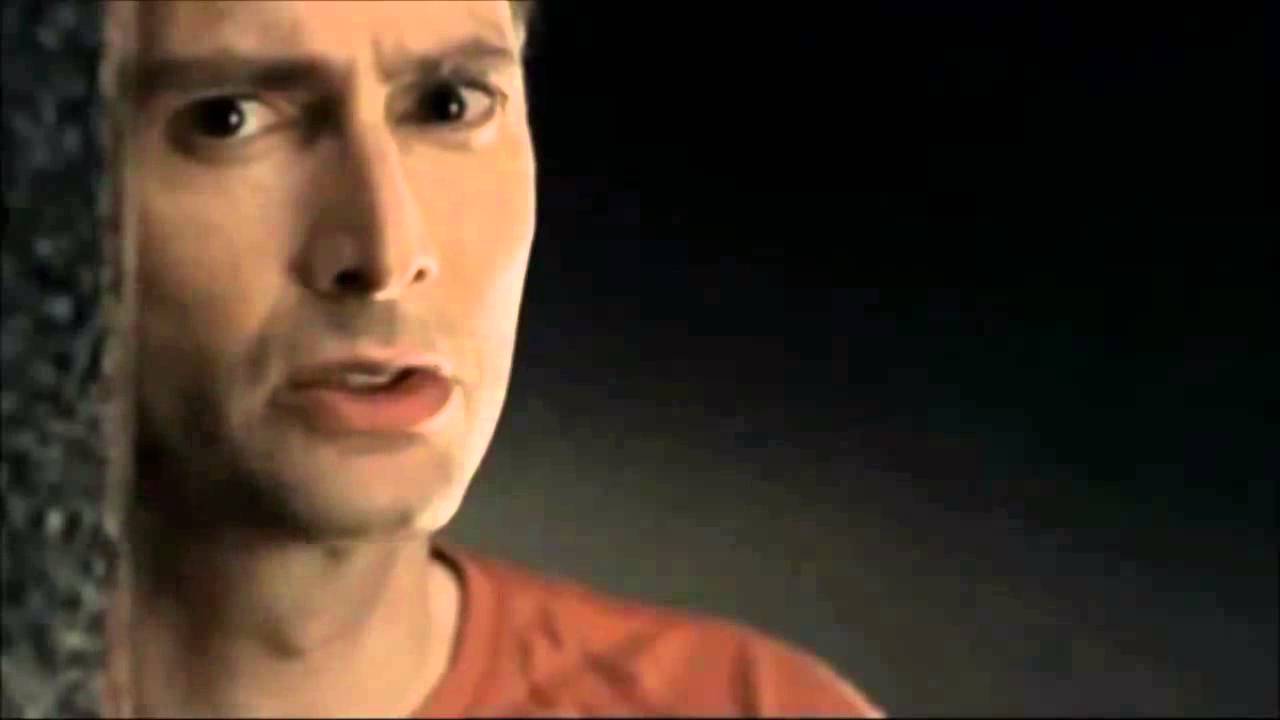
Jacques Louis David Tennant speaks Hamlet's 'To be or not to be' soliloquy
And that's wholly for this take on Hamlet's immortal lines. Did this page assistanc you? Any information we're missing that would be useful? Please do let America know in the comments surgical incision below!
hamlet speech to be or not to be analysis
Source: https://nosweatshakespeare.com/quotes/soliloquies/to-be-or-not-to-be/


0 Komentar